Theo: Where Victorian Grit Meets Digital Elegance
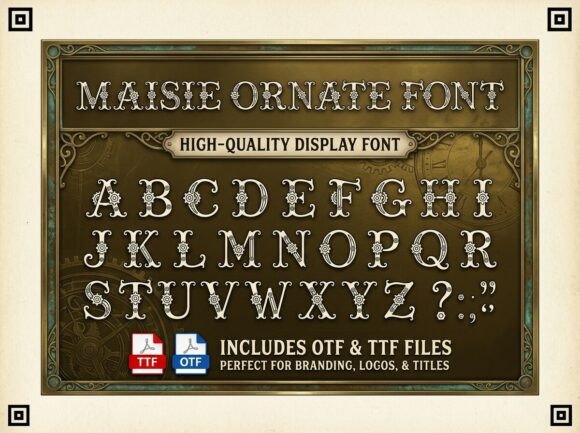
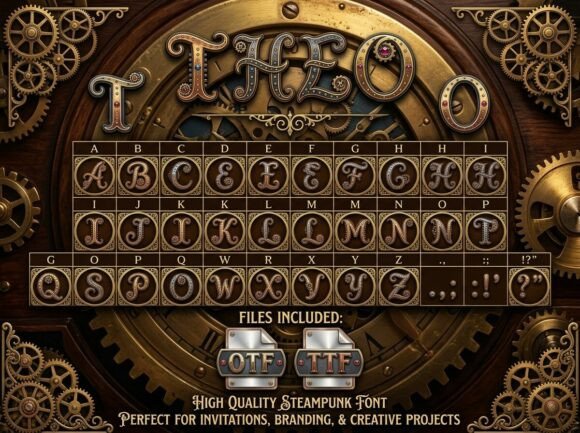
You know that feeling when you stumble upon something that just clicks? That's Theo. It's not just another decorative font sitting in your toolkit—it's a statement piece. Imagine every letterform meticulously detailed with clockwork gears, tiny rivets, and gemstone accents that catch the light. Theo is steampunk-inspired typography done right: ornate, mechanical, and dripping with the kind of Victorian craftsmanship that makes you want to run your fingers over the screen. But here's the real question: where does a font this bold actually make sense in your work?
More Than Just a Pretty Typeface
Let's get practical. Theo is a high-quality decorative typeface designed for moments when standard fonts fall flat. Each character feels like a handcrafted piece of Victorian machinery—think brass-and-copper elegance fused with industrial grit. The mechanical letterforms aren't just ornamental; they carry weight, texture, and personality. When you use Theo, you're not simply choosing a font. You're choosing a mood, a world, a narrative.
But decorative fonts can be tricky. Use them in the wrong context, and your design looks cluttered or illegible. Use them in the right one, and suddenly everything sings. That's what makes understanding Theo's strengths so important before you drop it into your next project.
Escape Room Branding That Actually Immerses
If you've ever designed for an escape room—or even visited one—you know immersion is everything. The moment players walk through the door, every visual cue matters. The signage, the booking website, the promotional posters, even the confirmation emails: they all need to whisper (or shout) that something extraordinary awaits.
Theo thrives here. Its clockwork precision and intricate detailing immediately signal adventure, mystery, and a world built with intention. Picture a booking page where the room title uses Theo—something like "The Alchemist's Workshop" rendered in those ornate, gear-adorned letters. Before players even step inside, they've already mentally transported themselves. The font does heavy lifting that stock imagery alone can't achieve.
Escape room owners and designers often struggle with branding that feels generic. Theo solves that by giving your visual identity a distinct, tactile quality that competitors using Helvetica or Playfair simply can't match.
Fantasy Novel Covers That Demand a Second Look
Browse any fantasy section at a bookstore, and you'll notice something: the covers that grab you from across the room almost always feature distinctive typography. Readers judge books by covers—constantly—and the title treatment is often the deciding factor between a curious pickup and a scroll-past.
Theo works beautifully for fantasy, steampunk, and historical fiction covers. Its mechanical letterforms suggest worlds of invention, intrigue, and craftsmanship. For a novel set in a Victorian-era inventor's workshop or a clockwork-powered kingdom, Theo doesn't just complement the story—it extends it onto the cover. The gemstone accents catch the eye, the rivet details reward closer inspection, and the overall aesthetic tells readers exactly what kind of journey they're signing up for.
Self-published authors and indie publishers especially benefit here. When you're competing against traditionally published titles with big design budgets, having a typeface with this much built-in character levels the playing field considerably.
Boutique Watchmaker and Artisan Identities
Here's a niche where Theo feels almost inevitable. Independent watchmakers, custom jewelry designers, and artisan craftspeople trade on the promise of meticulous handwork. Their brands need to communicate precision, heritage, and attention to detail without saying a word.
Think about a watchmaker's logo set in Theo. The gear details woven into each letter mirror the very craftsmanship the business sells. Business cards, website headers, packaging—suddenly every touchpoint reinforces the brand story cohesively. It's the kind of typographic choice that makes a small operation look established and intentional.
This extends beyond watches too. Custom leather workers, steampunk accessory makers, and vintage restoration businesses all operate in visual spaces where Theo's aesthetic feels native rather than forced.
Event Invitations Worth Framing
High-concept event invitations need typography that earns a spot on someone's refrigerator—or better yet, their mantelpiece. Whether you're designing for a themed gala, a product launch with theatrical flair, or a milestone birthday with a Victorian twist, Theo elevates invitations from informational to collectible.
Consider a murder mystery dinner party invitation. The host wants something that builds anticipation before guests even RSVP. Theo on the invite card immediately sets the tone: sophisticated, mysterious, and meticulously curated. The mechanical details suggest that every element of the evening has been engineered with care.
Event planners and stationery designers regularly face the challenge of making physical invitations feel worth the effort in a digital-first world. Theo gives them a compelling reason to print on heavy cardstock and let the typography do the talking.
Digital Applications and Content Creation
Beyond print, Theo finds a natural home in digital spaces. YouTube thumbnails for history or engineering channels, podcast cover art exploring Victorian-era stories, social media graphics for themed content creators—the applications extend wherever visual storytelling meets a vintage-industrial aesthetic.
Bloggers covering maker culture, steampunk fiction, or horology can use Theo in their header graphics to instantly establish visual authority. It signals to visitors that this creator understands and respects the aesthetic they're exploring.
What to Consider Before Using Theo
A few honest considerations matter here. Theo is a decorative display font, which means it shines in headlines, logos, and short bursts of text. Setting an entire paragraph in Theo would sacrifice readability for aesthetics—not a worthwhile trade. Pair it with a clean, legible body font for best results.
Context matters enormously. Theo would feel out of place on a corporate banking website or a medical practice brochure. Its strength lies in creative, artisan, entertainment, and niche commercial spaces where its personality enhances rather than overwhelms.
Also consider your audience's expectations. If your readers or customers appreciate craftsmanship, history, and imaginative design, Theo will resonate deeply. If they're looking for minimalist modernism, choose something else entirely.
The Bottom Line
Theo isn't trying to be everything to everyone—and that's precisely its power. It's a specialist tool for designers, creators, and business owners who need typography that tells a story before the first word is read. When the project calls for mechanical elegance and Victorian-era grandeur, Theo delivers with clockwork precision. Choose it when your design needs to feel engineered, not just assembled.