Maisie: The Ornate Font That Brings Victorian Craftsmanship to Your Modern Projects
There’s a certain magic in the aesthetic of a bygone era, a feeling of intricate detail and deliberate craftsmanship that stands out in our streamlined digital world. For creators, entrepreneurs, and designers seeking to evoke that specific blend of industrial elegance and whimsical invention, the right typeface is more than just a tool—it's a portal. This is where Maisie, a unique ornate display font, enters the conversation. It’s not merely a collection of letters; it’s a carefully crafted system of gears, cogs, and rivets that tells a story of Victorian ingenuity and steampunk imagination.
More Than Just Letters: Understanding Maisie’s Design DNA
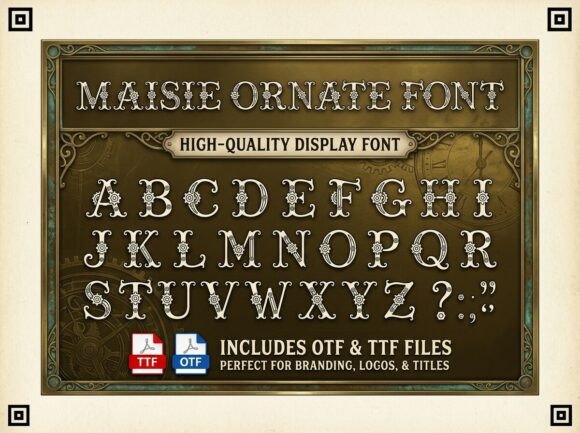
At its core, Maisie is a display typeface, meaning it’s designed to make a statement in headlines, logos, and short bursts of text rather than in long-form paragraphs. Its letterforms are built on a classically structured foundation, giving them a sense of balance and readability. However, the true character of Maisie is revealed in its details. Each character is adorned with mechanical embellishments—delicate gear teeth along the curves, subtle cog shapes within the counters, and rivet-like details that suggest assembly and precision. This isn't a font that shouts; it intrigues. It invites the viewer to look closer, to appreciate the complexity, and to immediately grasp the thematic world you’re building.
Real-World Applications: Where Maisie Truly Shines
The beauty of a font like Maisie lies in its specificity. It solves a very particular creative problem: how to instantly communicate a theme of craftsmanship, retro-futurism, or artisanal quality. Let's explore the tangible scenarios where it becomes an indispensable asset.
Crafting an Identity for Artisanal Businesses
Imagine you're launching a small-batch apothecary or a bespoke fragrance house. Your brand isn't just about the product; it's about the story, the ritual, the sense of discovery. Using Maisie for your logo and primary headings on packaging and your website immediately sets a tone of curated, old-world knowledge. It suggests that what’s inside is formulated with care and intention, much like a complex clockwork mechanism. For an independent watchmaker or a custom jewelry designer, Maisie can become the cornerstone of a visual identity that speaks to precision, legacy, and the art of making beautiful, functional things by hand.
Setting the Scene in Creative and Entertainment Projects
The applications extend powerfully into the creative and entertainment industries. A vintage-themed escape room designer can use Maisie on their marketing materials, signage, and puzzle props to build immediate immersion. The font itself becomes part of the environment, hinting at the mechanical puzzles and hidden secrets participants will encounter. Similarly, for a film director or a game developer working on a steampunk or Victorian-era project, Maisie is a perfect tool for crafting cinematic title cards, in-game menus, and chapter headings. It provides instant atmospheric credibility, reducing the need for lengthy exposition to establish a setting.
Elevating Personal and Hobbyist Projects
The appeal of Maisie isn't limited to commercial ventures. For hobbyists and creators in the maker community, it adds a professional and thematic polish to personal projects. Consider using it for:
- Custom Party Invitations: Designing a unique invitation for a themed birthday or a murder mystery dinner that needs a specific, atmospheric font.
- Blog Headers: A blogger focusing on DIY crafts, historical reenactment, or speculative fiction can use Maisie for their blog title and section headers to reinforce their niche.
- Scrapbooking and Journaling: Adding a touch of vintage mechanical elegance to digital or physical scrapbook pages documenting a trip to a science museum or a historical site.
Choosing to Use Maisie: Practical Considerations
While Maisie is a powerful tool, its effectiveness depends on thoughtful application. Before integrating it into your project, consider these practical points to ensure it delivers the right impact.
Legibility and Context Are Key
As a highly detailed display font, Maisie is not designed for body text. Its intricate details, when sized down for long paragraphs, can become visually noisy and difficult to read. The rule of thumb is to use it sparingly and strategically—for headlines, logos, pull quotes, or short, impactful statements. Always pair it with a clean, simple sans-serif or serif font for body copy to create a balanced and readable hierarchy. This contrast actually helps Maisie stand out more, as it isn’t competing with other complex elements.
Ensuring Thematic Alignment
Ask yourself: does the core theme of my project genuinely align with Victorian, steampunk, or industrial elegance? Using Maisie for a minimalist tech startup or a sleek, modern wellness brand would create a confusing dissonance. Its power comes from its specificity. It’s a perfect fit for a project celebrating the tactile, the mechanical, and the ornate. For projects that are clean, digital, or minimalist, a different typeface would be a more effective communicator.
Technical and Licensing Factors
When you acquire Maisie, you’re investing in a crafted piece of design work. Take a moment to understand the licensing terms. Is it for personal use only, or does it include commercial rights? This is crucial if you plan to use it for client work, on products for sale, or in monetized content. Additionally, check the available file formats (like .OTF or .TTF) to ensure compatibility with your design software, whether it's Adobe Creative Suite, Canva, or other platforms.
The Final Gear in Your Design Toolkit
Ultimately, Maisie is a specialized instrument. It doesn't try to be everything to everyone. Instead, it offers a definitive, high-quality solution for creators who need to instantly evoke a world of intricate craftsmanship and industrial beauty. By understanding its strengths and applying it with purpose, you can transform a simple headline into a compelling invitation, a basic logo into a memorable symbol, and a project’s identity from the ordinary into the truly extraordinary. It’s the font for when you want your work to not just be seen, but to be explored.