Evaluating London History Duo: A Guide to Its Aesthetic and Functionality
Understanding the Core Design Philosophy
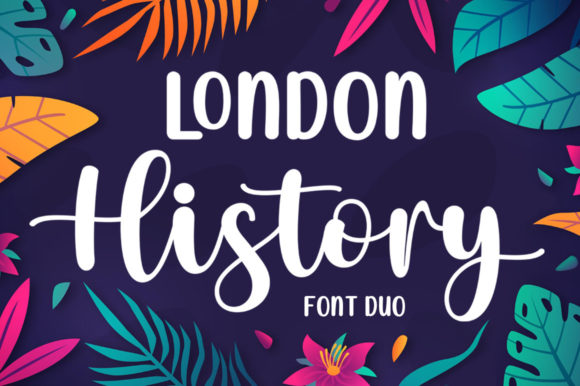
When designers seek to evoke a sense of elegance, nostalgia, or artisanal quality, the choice of typography becomes a critical decision. London History Duo represents a specific approach to this challenge, combining the structural stability of a display font with the fluid, organic nature of a script. At its heart, this typeface is designed to mimic the appearance of hand-lettered calligraphy, yet it maintains a level of legibility required for modern digital and print media. The "Duo" aspect is significant; it implies a harmonious pairing that has already been tested and optimized by the type designer. This removes the guesswork often associated with combining two separate fonts, ensuring that the x-heights, weight, and stylistic quirks complement rather than clash with one another.
The visual language of London History Duo leans heavily into a vintage aesthetic. It often features high-contrast strokes, flowing ligatures, and swashes that suggest a bygone era of signage and bookbinding. For creatives working on projects that require a touch of heritage—such as wedding invitations, boutique branding, or historical fiction covers—this font provides a ready-made solution. However, understanding the nuances of its design is essential before integrating it into a professional workflow. It is not merely a decorative element; it is a functional tool that communicates specific connotations to the viewer immediately upon sight.
The Technical Advantage of PUA Encoding
Beyond the visual appeal, the technical specifications of a font dictate its utility in professional environments. One of the most notable features of London History Duo is its PUA (Private Use Areas) encoding. For those unfamiliar with font engineering, this is a crucial technical detail that separates professional-grade typography from amateur offerings. PUA encoding ensures that all glyphs, swashes, and alternate characters are accessible regardless of the design software being used.
In practical terms, this means that a user working in Adobe Illustrator, Photoshop, or even less specialized software can access the full range of stylistic options without needing advanced OpenType feature support. This democratization of access is a significant tradeoff consideration. Some high-end typefaces rely on complex OpenType features that are only fully functional in advanced layout programs. London History Duo prioritizes accessibility, ensuring that the extra flourishes and decorative elements are available to a broader range of users. This reliability is a key factor when evaluating resources for a team with varying levels of technical expertise or software access.
Comparing Aesthetic Categories and Alternatives
When evaluating London History Duo, it is helpful to compare it against broader categories of script and display fonts to understand where it fits. The market is saturated with script fonts, ranging from casual brush scripts to formal copperplate calligraphy.
- Casual Brush Scripts: These often mimic marker or paint strokes and are suited for edgy, modern, or informal branding. London History Duo is distinct from these because it lacks the raw, gritty texture of a brush, opting instead for a smoother, more refined finish.
- Formal Calligraphy: Traditional calligraphy fonts are often strictly structured. While London History Duo draws inspiration from this style, it often includes more playful swashes and a slightly more relaxed baseline, making it feel less rigid and more artistic.
- Serif Display Fonts: A designer might also consider a bold serif font for a vintage look. While serifs provide structure, they lack the personal, human touch that the script element of the Duo provides.
The distinction lies in the "hybrid" nature of the asset. It attempts to offer the best of both worlds: the readability of display typography with the personality of hand-lettering. When comparing this to using two separate fonts—one for headers and one for accents—London History Duo offers a cohesion that can be difficult to replicate manually. It removes the friction of font pairing, which is often a stumbling block for designers who are strong in layout but less confident in typography theory.
Strengths, Tradeoffs, and Best-Fit Scenarios
No typeface is universally perfect for every application. Evaluating London History Duo requires a clear-eyed look at its strengths and its limitations. Its primary strength is its ability to instantly establish a mood. If a project requires a "London heritage" vibe—think tea shops, vintage maps, or classic tailoring—this font does the heavy lifting. The inclusion of swashes and alternates allows for customization, ensuring that headlines do not look generic or repetitive.
However, there are tradeoffs. The very features that make it beautiful—long swashes and cursive connections—can become liabilities in specific contexts. For instance:
- Legibility at Small Sizes: Highly stylized scripts often suffer when reduced to small point sizes, such as in sub-captions or dense body text. The intricate details can blur together, making the text difficult to read.
- Contextual Appropriateness: Using London History Duo for a modern tech startup or a minimalist Scandinavian furniture brand would likely result in a dissonance of tone. The font carries strong historical connotations that can clash with contemporary or ultra-modern themes.
- Overuse of Swashes: While the PUA encoding allows for easy access to flourishes, overusing them can make a layout look cluttered or amateurish. Restraint is often required to maintain professional credibility.
The best-fit situations are those where the narrative of the design aligns with the font's personality. This includes luxury packaging, event stationery, editorial magazine headers, and signage for brick-and-mortar boutiques. In these scenarios, the font acts as a storyteller, setting the scene before the reader even processes the words.
Decision Factors for Implementation
When deciding whether to incorporate London History Duo into a project, the decision should be driven by the target audience and the medium of delivery. If the audience is adults aged 20–50 who appreciate craftsmanship, history, or artisanal quality, the font is likely a strong candidate. This demographic often responds well to design cues that suggest authenticity and attention to detail.
Furthermore, consider the versatility of the project. If the design requires a font that can function as both a headline and a supporting decorative element, the "Duo" nature of the asset is advantageous. It provides a built-in hierarchy. For example, the display component might be used for the main title, while the script component is used for pull quotes or accent text, creating a visual rhythm that guides the reader's eye.
However, if the project requires heavy text blocks, multilingual support for complex character sets, or interface design for digital apps, a different category of typeface would be more appropriate. In those cases, a clean sans-serif or a highly legible serif would serve the functional requirements better. London History Duo is best viewed as a specialized tool for specific creative problems rather than a workhorse font for all text needs.
Practical Application and Resource Evaluation
Ultimately, the value of a resource like London History Duo lies in how it streamlines the creative process. By providing a pre-paired set of fonts with accessible glyphs, it reduces the time spent on technical troubleshooting and allows the designer to focus on composition and message. It is a resource that prioritizes aesthetic impact and ease of use.
For those evaluating this option, a practical approach is to test it within the specific context of the intended project. View the font in the intended color palette, alongside the planned imagery, and at the relevant sizes. This hands-on evaluation will reveal whether the vintage charm of London History Duo enhances the message or distracts from it. In the landscape of design resources, it stands as a solid option for those seeking to inject a dose of classic elegance into their work, provided the context and constraints are carefully managed.