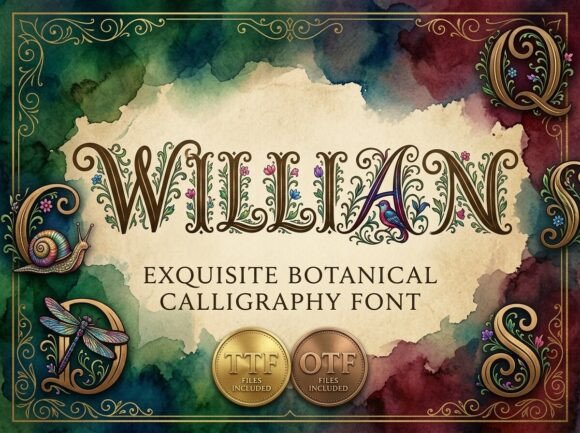
The Art of Victorian Grace: Understanding the William Typeface
In the world of design, typography is more than just arranging letters; it is about evoking emotion and telling a story before a single word is read. When a project demands a touch of timeless elegance and intricate beauty, standard sans-serifs or clean serifs often fall short. This is where the magic of William comes into play. More than just a font, William is a meticulously crafted piece of art that channels the opulence of the Victorian era through a modern lens. It captures the imagination by transforming ordinary text into a flourishing garden of woven vines, delicate blossoms, and whimsical nature motifs.
A Garden Within Every Letter
What sets William apart from other decorative typefaces is its sheer level of detail. Imagine a typeface where the crossbar of a lowercase 't' is a trailing vine, or the counter of an 'o' reveals a hidden snail or dragonfly. That is the experience William offers. Every character in this collection is treated as an individual illustration. The designers have integrated elements of nature so seamlessly that the letters themselves seem to grow and breathe.
The font features a stunning ornate floral script style. The strokes are fluid and connected, mimicking the hand of a skilled calligrapher, yet they are adorned with botanical precision. You will find:
- Intricately woven vines that loop and intertwine through the ascenders and descenders.
- Delicate blossoms that add softness to the angular curves of the script.
- Hidden nature motifs such as butterflies, dragonflies, and snails that reward the viewer upon closer inspection.
This level of ornamentation bridges the gap between classic illustration and modern typography. It does not simply sit on the page; it commands attention and creates an atmosphere of luxury and exclusivity.
Practical Applications for William
While William is undeniably artistic, it is also highly functional for specific niches. Understanding where this typeface shines is key to using it effectively. It is not designed for body copy in a manual; rather, it is a display font meant for headlines, logos, and artistic statements.
Luxury Wedding Invitations and Stationery
The most natural home for William is in the world of weddings. For couples seeking an aesthetic that is romantic, vintage, or garden-themed, this font is a perfect match. It pairs beautifully with textured paper stocks like cotton or linen. Using William for the names of the bride and groom on an invitation suite instantly elevates the design, suggesting a celebration that is thoughtful and sophisticated. It works exceptionally well for wax seals or foil-stamped headers.
High-End Branding and Boutiques
Branding is about differentiation. If you are developing a brand identity for a luxury boutique, a perfumery, or a high-end florist, William provides an immediate visual shorthand for quality. A logo set in William suggests that the product inside the packaging is crafted with care. It tells the customer that they are buying into a lifestyle of elegance and refinement.
Botanical Packaging and Editorial Design
For products that rely on natural ingredients—such as artisanal soaps, herbal teas, or organic cosmetics—William reinforces the connection to nature. The hidden dragonflies and vines within the letterforms align perfectly with the product's ethos. Similarly, in editorial design, such as magazine covers or book titles for period fiction, this typeface can set the mood instantly.
Integrating William into Modern Workflows
Adopting a specialized font like William requires a shift in design thinking. In modern workflows, where minimalism often reigns, using a highly ornate script can feel daunting. However, when used correctly, it can be the centerpiece of a successful design.
The key to integrating William is contrast. Because the font is so detailed and busy, it requires breathing room. It should not be set against a cluttered background or paired with other overly decorative fonts. Instead, use a clean, simple sans-serif or a classic serif for supporting text. Let William be the star of the show for the headline or the hero text.
Furthermore, consider the medium. William is a vector-based artwork, meaning it scales beautifully for large-format printing. Imagine this font used on a storefront window or a large event banner. The intricate details of the vines and flowers become even more impressive at scale, turning a simple sign into a piece of public art.
Key Characteristics and Design Considerations
Before choosing William for a project, there are a few important characteristics to consider. These factors will help you decide if the font aligns with your specific needs and how to prepare your files for the best results.
- Readability vs. Legibility: As with most ornate scripts, legibility is secondary to style. William is designed for short bursts of text—names, titles, or single words. Avoid using it for sentences longer than a few words, or the intricate details may merge and become difficult to read at a glance.
- File Size and Rendering: Because each glyph is complex, vector files using William can be heavier than standard fonts. When preparing files for web use, it is advisable to convert the text to outlines or use high-quality image formats (like SVG) to ensure the browser renders the fine lines correctly without lag.
- Ink Density: If you are printing using letterpress or screen printing, the density of the vines and flowers in William can be a challenge. It works best with digital printing or foil stamping, where fine lines can be preserved without bleeding.
The Psychological Impact of Ornate Typography
Why do we associate scripts like William with luxury? It comes down to psychology. In an era of digital speed and instant gratification, intricate, hand-drawn style typography signals time and effort. It suggests that someone cared enough to design something beautiful. The Victorian aesthetic, in particular, is associated with a time of craftsmanship and attention to detail.
When a customer sees William on a logo or an invitation, they subconsciously process the effort represented by the font. It builds trust and perceived value. For a business, this can translate directly into a willingness to pay a premium for a product or service. The font does the heavy lifting of establishing a high-end price point before the customer even knows the cost.
Tips for Pairing and Color
To get the most out of William, you need to think about its surroundings.
- Color Palettes: William looks stunning in metallics—gold, copper, or rose gold. These colors highlight the "veins" of the vines and the contours of the flowers. It also pairs well with deep, moody colors like forest green, midnight blue, or burgundy, which create a rich, jewel-toned aesthetic.
- Font Pairing: As mentioned, simplicity is key. A geometric sans-serif like Montserrat or a light, airy serif like Playfair Display can provide a clean backdrop that allows William's details to pop. Avoid pairing it with other scripts or slab serifs.
- Spacing: Give William room to breathe. Because the letters have swashes and vines that extend beyond the standard bounding box, tracking (letter-spacing) should be generous. This prevents the details from one letter crashing into the next, ensuring the design remains legible and elegant.
Bridging Classic and Contemporary
William is a testament to how design can honor the past while serving the present. It takes the best elements of Victorian illustration—the love of nature, the appreciation for symmetry, and the joy of ornamentation—and packages them in a format that works with modern digital tools.
Whether you are a graphic designer working on a luxury brand identity, a bride planning a dream wedding, or a stationery enthusiast looking for the perfect script, William offers a solution that is both practical and poetic. It is a font that doesn't just spell out words; it weaves a narrative. By choosing William, you are choosing to make your project not just seen, but remembered.