Milestone: Reviving Vintage Charm with a Duo Font for Modern Design
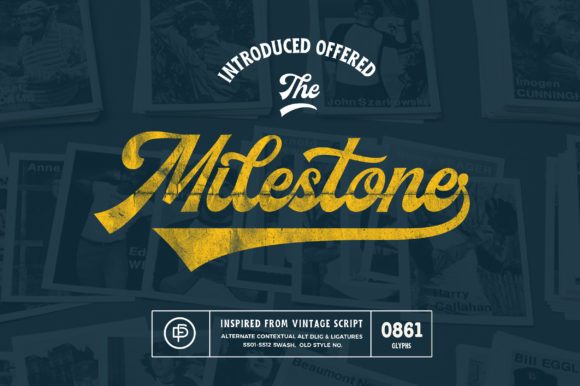
In the vast and often overwhelming world of digital typography, finding a font that tells a story is like striking gold. We are constantly bombarded with clean, geometric sans-serifs that dominate the modern web. While these are functional, they often lack a soul. Enter Milestone, a typeface that doesn't just display letters; it transports you to a different era. Inspired by the golden age of baseball, the gritty art of sign painting, and the meticulous craft of vintage labeling, Milestone is more than just a font—it is a design system built to evoke nostalgia and authenticity.
For designers, small business owners, and creatives, understanding how to harness the power of a font like Milestone is essential. It bridges the gap between the past and the present, allowing you to create visuals that feel established, trustworthy, and deeply personal. This article explores the anatomy, application, and artistic significance of the Milestone font duo, offering a guide on how to use it to build a brand with a distinct vintage soul.
The Anatomy of Nostalgia: What Makes Milestone Unique?
To appreciate Milestone, one must first understand its DNA. It is not a singular typeface but rather a duo font. This distinction is crucial for designers. A duo font package typically pairs two distinct styles that are designed to work in perfect harmony. In the case of Milestone, this pairing combines the elegance of a classic serif with the fluid, organic nature of a handwritten script.
The Serif Component: Structure and Authority
The serif portion of Milestone draws heavy inspiration from the typography found on early 20th-century packaging and sports jerseys. It features strong vertical lines, sharp edges, and distinct "slab" characteristics. This style was originally designed to be legible from a distance—whether on a baseball card or a storefront sign. In modern design, this component provides authority and structure. It grounds the layout, ensuring that the message is readable while maintaining that rugged, industrial aesthetic.
The Handwritten Component: Personality and Flow
Contrasting the rigid serif is the handwritten script. This element mimics the flow of a sign painter’s brush or the scrawl of a locker room signature. It adds a layer of human touch and imperfection that digital fonts often lack. When used for accents, logos, or headers, the script brings warmth and personality. It softens the hard edges of the serif, creating a visual conversation between the industrial and the personal.
Historical Roots: The Spirit of Baseball and Sign Painting
Why does this style resonate so deeply with us today? The aesthetic of Milestone is rooted in a time when things were built to last and branding was an art form.
Vintage Baseball: Think of the wool uniforms, the hand-painted scoreboards, and the typography of the early Major League Baseball era. The fonts used in that time were bold, condensed, and full of character. They represented grit, determination, and community pride. Milestone taps into this specific visual language, making it an ideal choice for any project that needs to convey a sense of heritage or competitive spirit.
Sign Painting and Labeling: Before the digital age, every sign was hand-lettered. Sign painters were masters of kerning, weight, and flourishes. Milestone digitizes this craftsmanship. It captures the slight irregularities and the "ink bleed" effect that makes hand-painted signs feel authentic. This is particularly relevant in the world of craft beverages, artisanal foods, and barbershop branding, where the "handmade" aesthetic is a major selling point.
Practical Applications: Where Milestone Shines
Understanding the history is one thing, but applying it effectively is where the magic happens. Milestone is versatile, but it excels in specific environments where a "vintage feel" is the primary objective.
1. Branding for Old-Fashioned Establishments
If you are designing a logo for a coffee shop, a whiskey bar, or a gastropub, Milestone is a perfect fit. These businesses often rely on an atmosphere of comfort and tradition.
- Coffee Shops: Use the serif for the shop name to establish a solid foundation, and the script for words like "Roastery," "Brew," or "Est. 2024" to add flair.
- Bars and Taverns: The rugged nature of the font pairs well with textures like wood grain, leather, and brick. It suggests that the establishment has a story to tell.
2. Logo Design and Labeling
Product packaging is where Milestone truly shines. In a crowded supermarket aisle, a vintage label stands out because it implies quality and time-tested recipes.
- Food Packaging: Perfect for hot sauces, craft beers, or organic jams. The combination of the serif and script creates a "badge" style logo that looks great on round stickers or wrap-around labels.
- Sports Merchandise: Given its athletic roots, Milestone is excellent for local team logos, gym branding, or vintage-style sports apparel.
3. Editorial and Web Design
While primarily a display font, Milestone can be used in web design to break the monotony of standard web fonts. It works exceptionally well for hero headers on websites. For example, a travel blog focusing on "Americana" or road trips could use Milestone for its headlines to immediately set the tone for the content.
Design Tips: How to Combine Milestone Effectively
Using a duo font requires a bit of finesse. Because Milestone has so much character, using it incorrectly can make a design look cluttered or illegible. Here is a guide to getting the most out of this typeface.
Pairing with Neutral Sans-Serifs
Because Milestone (both the serif and the script) has high decorative value, it should not be paired with other decorative fonts. The best practice is to pair it with a clean, neutral sans-serif like Helvetica, Open Sans, or Roboto for body text. This creates a necessary contrast. The vintage fonts grab attention, while the modern sans-serif ensures the smaller text remains readable.
Hierarchy and Spacing
- The Script: Use this sparingly. It is best for short bursts of text—taglines, single words, or headers. Avoid using the script for sentences longer than ten words, as the eye tires quickly of reading continuous cursive.
- The Serif: This is your workhorse for sub-headers. It is more legible than the script but still carries the vintage vibe.
- Letter Spacing (Tracking): Vintage fonts often benefit from slightly increased letter spacing, especially when using all caps. This gives the text room to breathe and enhances the "classic" feel.
Color and Texture
Milestone does not exist in a vacuum; it interacts with its background. To maximize the vintage effect:
- Color Palette: Think muted and earthy. Creams, burgundies, navy blues, forest greens, and charcoal greys work best. Avoid neon or overly bright modern colors.
- Textures: Overlaying the text on a subtle paper texture, distressed wood, or concrete can enhance the "aged" look of the font. This makes the digital design feel tactile and real.
The Psychology of Vintage Design
Why are we so drawn to fonts like Milestone? In an age of AI and high-tech interfaces, there is a psychological counter-movement toward the analog. Vintage design triggers a sense of nostalgia, a longing for a time perceived as simpler, more genuine, or more adventurous.
When a business uses a vintage font, they are borrowing from the equity of the past. They are saying, "We value craftsmanship. We have roots. We are authentic." This is a powerful branding tool. It builds trust. A customer is more likely to trust a "Small Batch BBQ" label that looks like it was printed in 1950 than one that looks like it was generated by a generic computer program yesterday.
Clarifying Common Misconceptions
As we explore the utility of Milestone, it is important to address a few misunderstandings that often arise with vintage typography.
"Vintage means old-fashioned and irrelevant."
This is a major misconception. In design, "vintage" is a style choice, not a technological limitation. Modern vintage design (often called "Newstalgia") combines retro aesthetics with modern layouts and high-resolution graphics. Milestone is a modern digital font optimized for today's screens, even though it looks like it came from yesterday's print shop.
"Decorative fonts are hard to read."
While this can be true for overly complex scripts, Milestone is designed with legibility in mind, particularly the serif component. The key is context. You wouldn't use Milestone to write a legal contract or a long-form blog post (body copy). However, for headlines, logos, and signage—where the goal is to attract attention quickly—it is highly effective and readable.
"I can just use any serif font to get this look."
Not all serifs are created equal. A font like Times New Roman is a "Transitional Serif" meant for newspapers. A font like Milestone is a "Slab Serif" or "Display Serif" meant for impact. Using a standard business serif will not achieve the warmth, texture, or historical reference that Milestone provides. The specific curves and weight distribution are what make the difference.
Conclusion: Building Your Legacy with Milestone
Typography is the voice of your brand. While images capture attention, fonts convey the tone. Milestone offers a voice that is confident, warm, and steeped in history. Whether you are designing a logo for a new startup, creating merchandise for a local sports team, or crafting a menu for a neighborhood cafe, this duo font provides the tools to tell a compelling story.
By combining the structural integrity of its serif with the personal touch of its script, Milestone allows you to create designs that feel both professional and handcrafted. It reminds us that good design isn't just about looking forward; sometimes, it's about looking back and bringing the best parts of the past into the present. In a world of fleeting trends, Milestone offers something timeless: authenticity.