Designing with Intent: How the Wishlist Travel Font Duo Captures Modern Aesthetics
In the fast-paced world of digital marketing and graphic design, the choice of typography is rarely just about legibility; it is about voice. When you select a typeface, you are setting the tone for the entire conversation between your brand and your audience. Among the vast sea of options available today, the Wishlist Travel font duo has carved out a distinct niche. It offers a harmonious blend of artistic flair and functional structure, proving to be an invaluable asset for designers seeking that "handmade" feel without sacrificing professional polish.
The Power of the Duo: Script Meets Sans
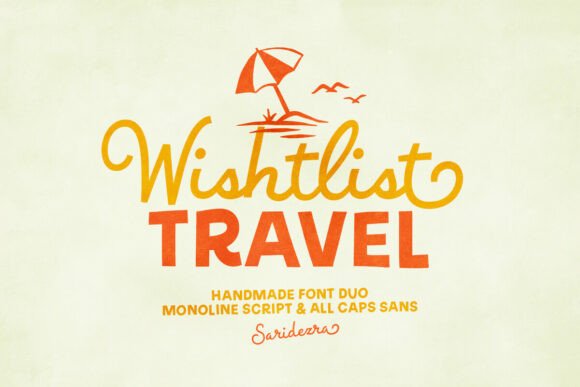
One of the most challenging aspects of design is font pairing. Mixing two typefaces that do not clash requires a keen eye for weight, proportion, and style. Wishlist Travel solves this problem instantly by providing a pre-matched pairing. It contains a clean, monoline script alongside a bold sans-serif companion. This combination creates an immediate visual hierarchy that is pleasing to the eye.
The monoline script brings the personality. It flows with a rhythm that suggests a human touch, making it perfect for headers or accents where you want to evoke emotion. On the other hand, the bold sans-serif provides the grounding. It is sturdy, readable, and authoritative, making it ideal for subheadings or supporting text where clarity is paramount. Together, they balance each other out, creating a dynamic that is both festive and sophisticated.
Aesthetic Versatility: From Weddings to Logotypes
The utility of Wishlist Travel extends across a surprisingly wide range of industries. While it fits perfectly into the "boho" or "rustic chic" aesthetic often sought after in the wedding industry, its applications are much broader. Because the font maintains a clean look, it avoids the messy appearance that sometimes plagues handwritten typefaces.
Consider the needs of a small business owner. They need a logo that stands out on a crowded shelf or a busy Instagram feed. Using Wishlist Travel allows them to create a logotype that feels bespoke and expensive. The script can be used for the main brand name to draw the eye, while the bold sans-serif can carry the tagline or the "Est. 2023" detail.
Similarly, in the realm of holiday marketing, the font shines. The "stylish and festive" look mentioned in its description translates beautifully to seasonal cards, gift tags, and social media announcements. It captures the spirit of celebration without relying on cliché tropes like snowflakes or holly, relying instead on the energy of the letterforms themselves.
Technical Nuances: The Magic of Ending Alternates
What separates a good font from a great one often lies in the details of its OpenType features. Wishlist Travel includes a specific feature known as "ending alternates" within its script component. For those unfamiliar with typography software, this is a game-changer.
When writing in uppercase script, the letters can often look disjointed or blocky. Standard uppercase letters in script fonts are designed to stand alone, which can disrupt the flow of a word. Ending alternates allow the designer to swap out the final letter of a word for a version that has a tail or a flourish. This "balances the looks of the uppercase," ensuring that the word doesn't just stop abruptly but rather trails off with elegance.
This feature is particularly useful for monograms or single-word headlines. It adds a level of customization that makes the text look truly hand-lettered rather than typed. It demonstrates that the creators of Wishlist Travel understood the practical frustrations designers face and engineered a solution directly into the font file.
Global Reach: Multi-Language Support
In our increasingly connected world, design is rarely limited to a single locale. A brand in Paris might market to customers in New York, Berlin, and São Paulo. This is where the technical specification of multi-language support becomes critical. Wishlist Travel is equipped to handle a variety of character sets beyond standard English.
If you are working on a project for an international client, or perhaps creating templates for a marketplace like Etsy where customers speak different languages, you cannot afford to use a font that lacks special characters. Missing accents or diacritics can make a design look unfinished or unprofessional. With Wishlist Travel, the designer can confidently use the typeface for French, Spanish, German, and other European languages without worrying about broken characters. This ensures brand consistency across borders.
Practical Application in Modern Workflows
Modern design workflows are often about speed and adaptability. Whether you are working in Adobe Illustrator, Photoshop, or a web-based platform like Canva, you need assets that are easy to manipulate. Wishlist Travel fits seamlessly into these environments.
For social media managers, the font duo is a time-saver. Creating daily content requires a constant stream of fresh visuals. Having a reliable pairing like Wishlist Travel means less time experimenting with fonts and more time focusing on the message. You can quickly type out a quote, adjust the size of the sans-serif for the attribution, and have a graphic ready for posting in minutes.
Furthermore, the "clean" aspect of the font makes it surprisingly legible at smaller sizes, provided the bold sans-serif is used for the bulk of the text. This is a practical consideration for print materials like business cards or flyers, where space is limited and readability cannot be compromised.
Choosing the Right Typeface for Your Brand
When selecting typography, one must consider the psychology of the audience. A font like Wishlist Travel signals creativity, approachability, and warmth. It is an excellent choice for industries such as:
- Lifestyle and Beauty: Blogs and product packaging that need a personal touch.
- Travel and Adventure: Capturing the excitement of exploration (fitting given the name).
- Food and Beverage: Particularly for artisanal or homemade goods where "handmade" is a selling point.
- Event Planning: As mentioned, weddings are a primary use case, but birthday parties and baby showers also benefit from this aesthetic.
However, it is important to assess the context. If you are designing for a corporate law firm or a medical institution, the festive and handwritten nature of Wishlist Travel might not convey the necessary seriousness. Typography is about matching the tool to the task.
Maximizing Impact with Stylistic Choices
To get the most out of Wishlist Travel, designers should pay attention to spacing and color. Because the script has a monoline weight, it pairs well with flat colors rather than heavy gradients. Allowing the text to breathe with generous letter spacing (tracking) can enhance the "stylish" factor.
Imagine a wedding invitation printed on textured cotton paper. The script of Wishlist Travel is printed in a soft sage green, with the names of the couple in the script font and the venue details in the bold sans-serif. The ending alternates are used on the last letters of the names, giving the invite a custom, high-end feel. This is the level of detail that clients pay for, and this font duo facilitates it without requiring the designer to draw the letters by hand from scratch.
Ultimately, Wishlist Travel is more than just a collection of letters. It is a design solution that bridges the gap between digital convenience and analog charm. By combining a versatile monoline script with a robust bold sans-serif, and supporting it with technical features like alternates and multi-language characters, it empowers creators to produce work that is beautiful, functional, and universally accessible. Whether for a fleeting social media post or a permanent brand identity, this font duo provides the tools necessary to tell a compelling visual story.