Evaluating Broken Rudder: A Deep Dive into This Vintage Nautical Typeface
When searching for a typeface that captures the raw, weathered essence of maritime history without looking like a digital filter, designers often find themselves navigating a sea of generic "pirate fonts." Among the options available, Broken Rudder stands out as a distinct contender. It is not merely a font but a hand-sculpted display typeface designed to bring the gritty reality of seafaring adventures and historic maritime expeditions to modern design projects. If you are evaluating typography for a project that requires authenticity, understanding the specific character and application of Broken Rudder is essential.
Distinct Design Language and Structure
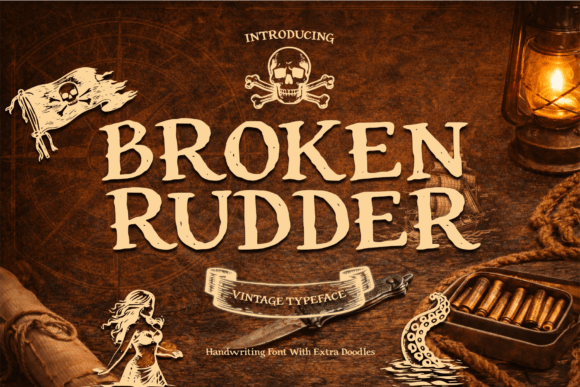
The primary distinction of Broken Rudder lies in its construction. Unlike many digital fonts that aim for perfection, this typeface embraces an unstructured, organically inspired aesthetic. The letterforms are bold and irregular, mimicking the look of vintage wood-carved signage. This design choice moves away from the uniformity of modern vector graphics, offering instead the texture of hand-hewn timber.
For designers comparing this to cleaner, more geometric vintage styles, the trade-off is clear: Broken Rudder prioritizes atmosphere over readability at small sizes. It is imbued with a robust retro vibe that feels archaic and printed rather than typed. The "broken" nature of the rudder—reflected in the imperfect lines and heavy weight of the characters—suggests a history of use and exposure to the elements. This makes it distinct from "polished" vintage fonts that look too clean to feel authentic.
The Role of Decorative Elements
A significant factor in evaluating Broken Rudder is the inclusion of additional decorative assets. The font package comes adorned with a variety of doodles and ornaments that emphasize its seaborne style. When comparing this to standard typeface families, this is a notable advantage. Usually, a designer must source separate icon packs to match the vibe of their typography. Here, the integration is seamless. However, this also means the typeface is highly specialized. It is a cohesive ecosystem of nautical design, which is a strength if that is your goal, but a limitation if you require a versatile workhorse font.
Comparing Categories and Alternatives
In the broader landscape of display fonts, Broken Rudder sits in a specific niche: the "rugged" vintage category. When exploring alternatives, you will generally encounter three other types of designs:
- Modern Interpretations: These are fonts that take the "serif" or "slab" style of the 19th century but smooth out the edges for digital clarity. Compared to these, Broken Rudder is more aggressive and thematic, but less suitable for body text.
- Calligraphic Scripts: Often used for elegant or "swashbuckler" styles. Broken Rudder is far more grounded and less flowery, focusing on the labor of the sea rather than the romance of it.
- Stencil Fonts: While industrial, stencils can sometimes evoke a naval feel. However, they lack the organic warmth and hand-sculpted texture that defines Broken Rudder.
When deciding between these options, consider the specific "age" you are trying to convey. If your project requires the look of a 1950s dockside tavern or a 19th-century ship manifest, Broken Rudder is likely the superior choice over cleaner, mid-century modern typefaces.
Practical Applications and Best-Fit Scenarios
Determining if Broken Rudder is the right resource involves looking at your specific use case. Because of its bold, unstructured nature, it excels in specific scenarios where immediate visual impact is required.
Ideal Use Cases:
- Branding for Themed Venues: For breweries, seafood restaurants, or escape rooms with a maritime theme, this font provides immediate context. It replaces the need for extensive illustration by embedding the story directly into the typography.
- Event Invitations: Themed parties or festivals can use Broken Rudder to set the tone immediately. It pairs well with textured paper stocks to enhance the tactile feel.
- Book Covers and Posters: For historical fiction or adventure novels, the font acts as a visual anchor. Its "pirate charm" communicates the genre instantly.
Limitations and Tradeoffs:
It is important to evaluate the limitations. Broken Rudder is a display font. This means it is designed for headlines and logos, not for paragraphs of text. Using it for long-form content will result in poor legibility. Additionally, because it has such a strong personality, it can easily clash with other decorative elements. If your design is already busy with illustrations, adding a heavily textured font like Broken Rudder might create visual noise rather than harmony.
Technical Considerations and Workflow
When comparing Broken Rudder to standard system fonts, you must also consider the workflow implications. The "hand-sculpted" nature of the typeface means it may not behave like a standard vector font when scaled. While it is designed for digital use, its aesthetic relies on maintaining a certain level of detail.
If you are working on a project that requires heavy customization—such as animating individual letters or distorting the text significantly—a cleaner, more geometric font might be easier to manipulate. Broken Rudder is best used "as is" to preserve its intended rugged charm. The inclusion of the decorative doodles also requires a workflow that allows for easy pairing of text and graphics, so ensure your design software can handle these elements efficiently.
Decision Factors for the Modern Designer
Ultimately, choosing Broken Rudder comes down to a balance between thematic specificity and versatility. If you are looking for a resource that offers a "time-honored typographical technique" and evokes the intrigue of archaic printed works, it is a strong candidate. It solves the specific problem of needing a vintage maritime aesthetic without looking generic.
However, if your project requires a font that can transition from a vintage header to a clean modern body text, or if the nautical theme is only a minor part of the design, you may find Broken Rudder too specialized. In those cases, a broader "retro" font family with multiple weights might serve you better.
For those ready to commit to a bold, pirate-inspired aesthetic, Broken Rudder offers a level of detail and character that is difficult to replicate with standard fonts. Its value lies in its ability to tell a story through the letterforms themselves, making it a potent tool for the right kind of creative challenge.