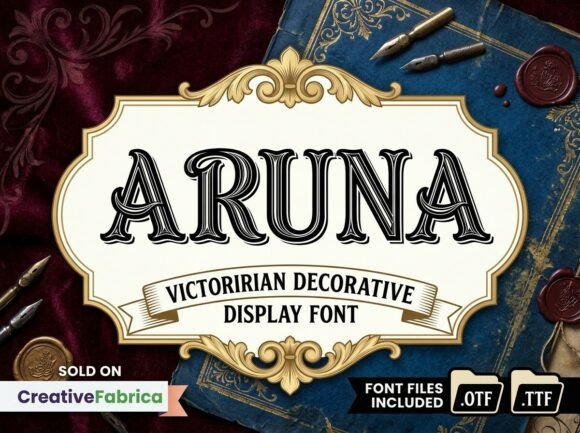
A Commanding Presence: Inside the World of Aruna
There’s a distinct feeling you get when you encounter typography that refuses to be ignored. It’s not just about reading the words; it’s about feeling the weight of them. This is the territory where Aruna lives. It isn’t a font that tries to whisper or blend into the background. Instead, it steps forward with a heavy structural weight and a prestigious personality, immediately commanding attention. If you’ve been searching for a premium font that bridges the gap between historical craftsmanship and contemporary branding, you might find your solution in this majestic display serif.
At its core, Aruna is a study in contrast and texture. It draws heavily from 19th-century letterpress aesthetics, where the imperfections of the press created a sense of authenticity that digital perfection often lacks. The typeface features high-contrast letterforms—thick strokes meeting thin hairlines—that give it a rhythmic, almost musical quality. But what truly sets it apart are the hand-drawn inline and engraved textures etched into the characters. These aren't just standard lines; they are artifacts of a vintage soul, giving the serif font a tactile quality even on a flat screen. When you add the elegant swirling swashes to the mix, Aruna transforms from a simple typeface into a piece of art, capable of elevating a simple headline into a memorable statement.
The Anatomy of Vintage Authority
When we talk about the visual characteristics of Aruna, we have to talk about its presence. This is a bold choice. The "heavy structural weight" mentioned in its description isn't just marketing speak; it dictates how the font occupies space. In logo design, this is invaluable. A logo needs to be legible at a glance and memorable in memory. Aruna’s thick serifs and deep cuts ensure that it holds up well in high-contrast environments, whether printed on a dark bottle label or embossed on a thick cotton business card.
However, understanding the font's "vintage-and-venerable soul" is key to using it correctly. It carries the DNA of the Art Nouveau and Victorian eras. This means it brings with it a sense of history, tradition, and established trust. For a modern brand, using Aruna is a way to visually suggest that you have roots, that you value quality over speed, and that you appreciate the finer details. It is a creative font that speaks a language of heritage, making it an ideal candidate for projects that require a touch of class without feeling stuffy or outdated.
Where Aruna Excels: Real-World Applications
Knowing a font is beautiful is one thing; knowing where to use it is another. Because Aruna is a display font, it is designed for impact, not for long-form body text. Think of it as the headline act, while a cleaner sans-serif or serif acts as the supporting band. Here are some specific areas where this typeface truly shines:
- Independent Distillery and Beverage Identities: There is a natural affinity between the engraved textures of Aruna and the labeling of craft spirits. It evokes the feeling of copper stills, oak barrels, and time-honored recipes. If you are designing for a gin, whiskey, or boutique winery, this font instantly sets a sophisticated mood.
- Boutique Heritage Shop Logos: Whether it’s a high-end barber, a leather goods store, or a bespoke tailor, Aruna provides the "heritage shop" aesthetic. It tells customers that the business is built on skill and tradition.
- Artisanal Stationery and Packaging Design: The swirling swashes make Aruna perfect for wedding invitations, high-end greeting cards, and luxury packaging. It adds a layer of elegance that feels personal and handcrafted.
- High-Impact Social Media Headers: In the fast-scrolling world of digital marketing, stopping the thumb is everything. Aruna’s high-contrast structure makes it pop on Instagram feeds and Pinterest boards, particularly for lifestyle, fashion, and culinary brands.
Strategic Implementation and Brand Perception
Choosing a typeface like Aruna is a strategic decision that influences how your audience perceives your brand. Typography is silent communication; it sets the emotional tone before the reader even processes the literal meaning of the words. By utilizing Aruna, you are signaling professionalism and a commitment to quality. In the realm of brand identity, consistency is king. Using a font with such a strong personality helps create a distinct visual voice that can be recognized across different mediums, from your website headers to your printed editorial design layouts.
However, balance is crucial. Because Aruna is so stylized, pairing it requires thought. You don't want to compete for attention. A common mistake is pairing a heavy display font with another decorative script font or a quirky handwritten font. This creates visual noise. Instead, look for a neutral partner. A clean, geometric sans serif font often works best here. The simplicity of the sans-serif will allow Aruna’s intricate details to breathe, ensuring your visual hierarchy remains clear and your content is readable.
Practical Considerations for Designers and Creators
If you are ready to integrate Aruna into your toolkit, there are a few practicalities to keep in mind. First, always test your font pairing in context. Seeing Aruna next to a body font on a mood board is different than seeing it on a live webpage or a physical mockup. Pay attention to the x-height and tracking; you may need to adjust the spacing between letters (kerning) manually to get the perfect rhythm, especially with those swashes.
Furthermore, check the licensing. Since this is a commercial font, ensure your license covers your intended use, whether that is for web design, merchandise, or software embedding. Review the included styles—does it come with a textured version and a clean version? Having multiple styles allows you to adapt the font to different background textures and printing capabilities without losing the brand's core identity.
Ultimately, Aruna is more than just a collection of vectors; it is a design asset capable of transforming a project from generic to distinguished. It requires a confident hand to wield, but for those willing to embrace its vintage soul, it offers a timeless way to command attention in a crowded market.