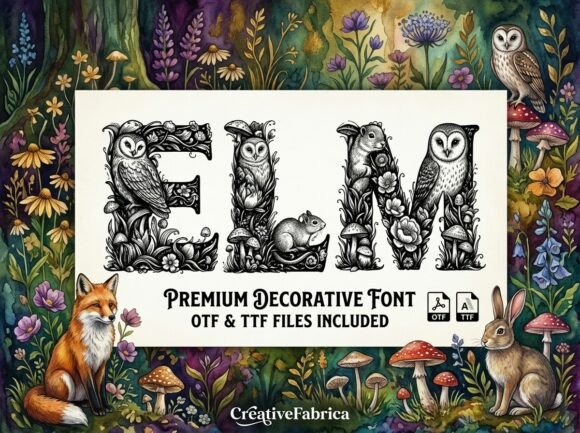
Step Into a Storybook World with Elm: Typography Meets Forest Magic
More Than Just a Font: A World in Every Letter
Elm is not your typical decorative typeface. It's a meticulously crafted world where each character is a miniature illustration, composed of woodland creatures, plants, and hidden details. A watchful owl perches in the curve of an 'O', a curious squirrel scurries along the spine of an 'S', and twisting ivy forms the elegant descender of a 'g'. This is typography that doesn't just spell words—it tells a story. For designers and creators seeking to inject a sense of wonder, nature, and narrative depth into their projects, Elm offers a unique and powerful tool. It moves beyond simple letterforms to become a central visual element, setting a distinct mood from the very first glance.
The true power of Elm lies in its ability to transport an audience. It evokes the quiet mystery of a deep forest, the charm of a classic storybook, and the intricate beauty of nature. This makes it an exceptional choice for projects that need to establish an immediate, strong thematic connection. Rather than using a generic serif or a standard decorative font, choosing Elm signals a commitment to a specific aesthetic and narrative. It’s a font that demands attention not through loudness, but through its rich detail and evocative personality.
Unlocking Elm's Creative Potential: Practical Applications
Understanding Elm's character is the first step. The next is applying it effectively. Its illustrative nature means it works best as a display font, used for headlines, titles, logos, and other prominent text elements where its details can be appreciated. Using it for long body copy would be illegible and overwhelming. The key is strategic placement for maximum impact.
For Authors and Publishers
Independent fantasy, children's book, or nature-themed authors can use Elm to create captivating cover art. A title set in Elm immediately communicates genre and tone, promising a world of enchantment within. It’s perfect for chapter headings, section breaks, or even a special edition’s interior design. The font itself becomes part of the book’s charm, offering readers a tactile, storybook experience. Consider pairing it with a clean, readable serif for the author name and back-cover text to maintain balance.
For Branding and Marketing
Brands centered around nature, eco-friendliness, artisanal goods, or whimsical products can build a distinctive identity with Elm. A logo using Elm can convey authenticity, craftsmanship, and a connection to the natural world. It’s particularly effective for:
- Children's brands: Toy companies, organic baby food, or educational apps about nature.
- Eco-conscious businesses: Sustainable goods, organic skincare, or outdoor adventure companies.
- Artisan makers: Herbalists, beekeepers, or creators of forest-themed jewelry.
Use Elm for product names on packaging, for the masthead of a nature-focused blog, or in social media headers to create an instantly recognizable and thematic feed. The key is consistency—using Elm in specific, high-visibility places reinforces brand recognition.
For Digital and Social Media Creators
In a crowded digital space, a unique visual identity is crucial. Bloggers, YouTubers, and social media influencers in niches like cottagecore, hiking, foraging, or fantasy art can use Elm to brand their channels. A YouTube channel banner, a podcast cover, or Instagram highlight covers featuring Elm will attract a like-minded audience. It sets a clear expectation of content quality and style. For Pinterest, which is highly visual, pins with titles set in Elm can stand out dramatically in a user's feed, driving more clicks and engagement.
For Interior Decor and Personal Projects
Elm’s charm extends to physical spaces. It is ideal for creating enchanting nursery wall art, inspirational quotes for a nature-themed room, or custom labels for a pantry or workshop. Imagine a child's name art print, with each letter a different woodland creature from the Elm font. For hobbyists and crafters, it can be used in digital scrapbooking, custom greeting cards, or invitations for a fantasy-themed event. The font provides a ready-made artistic element that elevates a DIY project to a professional-looking design.
Working with Elm: Tips for Effective Design
While Elm is visually stunning, using an illustrative font requires a thoughtful approach to ensure the final design is clear and effective, not cluttered.
Pairing and Contrast
The most important rule when working with a complex font like Elm is to pair it with simplicity. Because Elm is highly detailed and decorative, it needs a calm, neutral partner to create visual harmony. Choose a clean sans-serif (like Lato, Montserrat, or Open Sans) or a simple, readable serif (like Lora or Merriweather) for any secondary text, such as body copy, subtitles, or captions. This contrast allows Elm to shine as the hero element without overwhelming the viewer. The pairing creates a professional hierarchy, guiding the eye naturally from the striking headline to the supporting information.
Size, Spacing, and Color
Size Matters: Elm must be used at a large size. Its intricate details—the owls, mushrooms, and ivy—will disappear or become a muddy blur at small point sizes. Use it for main headlines or logos where it can be displayed prominently.
Give it Breathing Room: Because the letters are complex, they need space. Ensure generous letter-spacing and line-height (leading) in your design. Tight spacing will make the characters feel cramped and difficult to decipher. Ample whitespace around the text block will help the details of each letterform stand out.
Color Considerations: Elm often works best in a single, strong color—black, dark brown, or deep green—to maintain a clean, illustrative look. Using multiple colors within the font can get complicated and may reduce legibility. A monochromatic scheme lets the intricate outlines and shapes speak for themselves. If you do use a background color, ensure there is high contrast for readability.
Knowing When to Use It (and When Not To)
Elm is a specialist. It is not a workhorse font for all situations. Use it when your project goals align with its core aesthetic: nature, fantasy, whimsy, storybook, and detailed craftsmanship. Avoid using it for corporate, minimalist, or highly technical projects where its personality would feel out of place. Its strength is its specificity; forcing it into a context that doesn’t fit will result in a disjointed design. Always ask: does this font enhance the story I’m trying to tell? If the answer is yes, Elm is likely a perfect choice.
Conclusion: Crafting Your Own Enchanted Narrative
Elm is more than a collection of letters; it's an invitation to build a world. It provides creators, designers, and entrepreneurs with a foundational visual language steeped in natural wonder and narrative depth. By understanding its character and applying it with strategic intention—pairing it wisely, giving it space, and using it for the right projects—you can transform a simple title or logo into an unforgettable entrance into a storybook forest. It’s a tool for those who believe that design should not only be seen but felt, offering a touch of magic that resonates with audiences seeking authenticity and imagination. Let Elm be the root of your next creative project, and watch a unique world grow from it.