Mastering Visual Aggression: The Zulta Music Font Family Workflow
Defining the Aesthetic Foundation
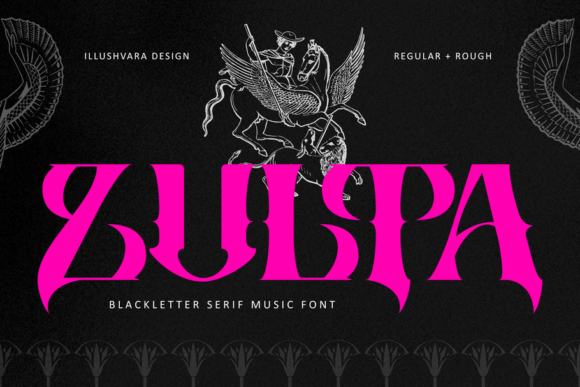
In the realm of design, typography is rarely just about legibility; it is about signaling intent. Zulta Music is a specialized typeface designed to solve a specific visual problem: how to convey power, history, and intensity through text. As a bold blackletter font family, it combines sharp serif all-caps with potent gothic energy. It is not a general-purpose font; it is a strategic asset for projects that require a dark, underground, or vintage aesthetic. Understanding where this font fits within a broader design workflow is the first step toward utilizing it effectively.
The typeface is available in two distinct styles: regular and rough. The regular style offers clean, precise lines with strong vintage influences, making it suitable for high-resolution prints where clarity of the letterform is paramount. The rough style introduces textured details that simulate wear, ink bleed, or environmental decay. This distinction is crucial for project planning. Selecting the wrong style can lead to wasted time in post-production. For example, using the rough style on a low-resolution digital banner may result in pixelated noise, whereas the regular style might appear too sterile for a distressed merchandise mockup without additional texturing work.
Strategic Implementation in Project Phases
Integrating a specialized typeface like Zulta Music requires a structured approach to your creative process. It should not be treated as an afterthought or a "drag-and-drop" solution added at the end of a project. Instead, it should be introduced during the ideation and planning phase.
Phase 1: Pre-Production and Asset Selection
Before opening your design software, assess the project requirements against the font’s capabilities. Zulta Music is optimized for metal music promotion, album covers, band merchandise, and festival branding. If your project involves body copy or informational text, this font is the wrong tool. It is designed for headlines, logos, and display text.
During this phase, determine the compatibility of the font with your medium. If you are designing for screen, ensure your resolution supports the font's dramatic letterforms. If you are preparing for print, particularly on textiles like t-shirts or hoodies, consider how the sharp serif edges will translate to different fabric weaves. Planning for these variables prevents bottlenecks during the final output stage.
Phase 2: Design Execution and Pairing
The true power of Zulta Music is realized when it interacts with other visual elements. A common workflow error is to use this font in isolation or paired with conflicting styles. Because Zulta Music carries a heavy "gothic" weight, it requires contrast to remain legible and impactful.
- Typography Pairing: Pair Zulta Music with a clean sans-serif or a simple serif font for secondary information. Avoid pairing it with other decorative or "grunge" fonts, as this creates visual clutter and undermines the hierarchy of the design.
- Color Theory: The font performs best against high-contrast backgrounds. It is designed for "dark visual projects," meaning it often sits on black or deep charcoal backgrounds. However, it can also be inverted for white backgrounds to create a stark, industrial look.
- Layout Integration: Use Zulta Music to anchor your composition. Its strong vertical presence makes it ideal for the center of a poster or the top of a layout. Allow for significant padding around the text to let the intricate details of the blackletter style breathe.
Phase 3: Refinement and Texture Application
Once the layout is established, the workflow moves to refinement. If you selected the regular style, this is the stage where you might decide if the design needs more grit. You can apply clipping masks or overlay textures to simulate the rough style manually, giving you more control over the distressed aesthetic.
Conversely, if you are using the rough style, check for consistency across the letterforms. In some cases, the texture might obscure a specific letter, requiring you to adjust kerning or tracking. Zulta Music is built with strong vintage influences, but modern applications often require precise spacing to ensure the text reads as a cohesive unit rather than a collection of individual symbols.
Operational Use Cases and Workflows
To fully grasp the utility of Zulta Music, consider how it integrates into specific professional workflows.
Music Industry Applications
For bands and promoters, the workflow is often deadline-driven. Zulta Music streamlines the creation of assets because it provides a pre-established aesthetic. Instead of spending hours trying to distress a standard font to look "metal," you start with a tool built for that purpose.
- Album Art: Use the font to create a focal point that communicates the genre immediately. The aggressive yet elegant character of the font helps set listener expectations before they hear a note.
- Merchandise: When designing for merchandise, vector scalability is key. Ensure you are working with the vector version of the font to maintain the sharp edges of the serifs when scaling up for large prints on the back of jackets.
- Festival Branding: For festivals, consistency is vital. Use Zulta Music across all touchpoints—from the lineup poster to the wristbands and stage banners—to create a unified brand experience.
Broader Creative Applications
While rooted in music, the font’s utility extends to other dark visual projects. This includes horror-themed event invitations, gaming clan logos, or streetwear branding. In these contexts, the workflow shifts slightly. You are no longer promoting music, but you are selling an identity. The font acts as a shorthand for "rebellion" or "tradition," depending on how it is styled.
Quality Control and Long-Term Integration
Adopting a new typeface into your library requires a system for management and quality control.
File Organization
Keep your font files organized by family and style. Since Zulta Music includes both regular and rough variants, naming your folders clearly (e.g., "Zulta_Music_Regular," "Zulta_Music_Rough") ensures quick retrieval. This is particularly important in collaborative environments where multiple designers access the same assets.
Compatibility Checks
Before finalizing a project, verify that the font renders correctly across all intended platforms. If the project is web-based, ensure the font is properly embedded or that fallback fonts are configured in your CSS to maintain the aesthetic if the primary font fails to load. For print, always generate a high-resolution PDF to preserve the vector integrity of the dramatic letterforms.
Consistency Across Projects
If you are building a brand identity that utilizes Zulta Music, create a style guide. Document the specific settings used with the font: size, color, kerning, and which style (regular vs. rough) is used for specific contexts. This ensures that whether you are creating a social media post or a physical banner, the visual language remains consistent.
Conclusion
Zulta Music is more than just a set of characters; it is a design system for conveying intensity and tradition. By integrating it thoughtfully into your workflow—starting with planning, moving through execution, and finishing with rigorous quality control—you can leverage its aggressive energy to produce professional, high-impact visual projects. It serves as a bridge between the raw underground aesthetic and modern design efficiency, providing creators with a reliable tool for projects that demand to be seen and felt.