Strategic Visual Impact: Integrating Makio into Your Brand Identity
In the competitive landscape of digital and print design, typography is not merely a vessel for information; it is a primary signal of brand personality. While minimalist sans-serifs have dominated the past decade, there is a strategic shift toward typefaces that command immediate attention without sacrificing legibility. Makio, a modern bold rounded sans-serif, represents this shift perfectly. It offers a distinct visual rhythm that balances soft geometry with heavy visual weight, making it a powerful asset for decision-makers looking to inject energy into their visual communications.
Understanding the Anatomy of Makio
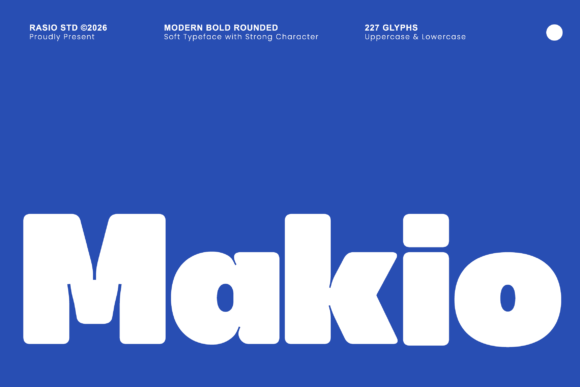
To leverage Makio effectively, one must understand its structural characteristics. It is defined by "pillowed" corners and smooth, tightly packed letter junctions. Unlike traditional geometric sans-serifs that rely on sharp, harsh angles, Makio strips away these rigid lines in favor of thick, plump vertical blocks. This design choice creates a "soft" strength. The generous x-height ensures that the text remains highly scannable, even at smaller sizes, while its heavy weight provides a solid, confident posture.
From a practical standpoint, this anatomy serves a specific psychological function. The rounded terminals of Makio are subconsciously associated with friendliness and approachability, while its sheer mass conveys authority and stability. For a brand strategist, this combination is rare and valuable. It allows a company to appear established and trustworthy while simultaneously feeling modern and accessible—a critical balance for startups and established enterprises alike.
Strategic Positioning and Brand Architecture
The decision to implement Makio should be rooted in your brand’s positioning strategy. This font is not designed to recede into the background; it is a display typeface meant to anchor your visual hierarchy. If your brand strategy relies on being perceived as quiet, traditional, or ultra-minimalist, Makio may create a disconnect. However, if your goal is to project vibrancy, confidence, and innovation, it is an optimal choice.
Consider the specific sectors where Makio excels. For vibrant tech startup branding, the font cuts through the noise of generic UI designs. It suggests that the software or service is user-friendly yet robust. In the realm of contemporary streetwear or modern food and beverage packaging, Makio captures the "shelf appeal" necessary to drive impulse decisions. Its clean perimeter line allows it to pop against complex backgrounds, making it a strategic tool for high-competition environments where split-second recognition determines a sale.
Aligning Typography with Customer Experience
Typography directly influences the user experience (UX). When planning your interface design or marketing collateral, think of Makio as the voice of your brand’s most confident speaker. Because of its heavy visual weight, it commands the user's eye immediately. In bold app interface designs, using Makio for headers or call-to-action (CTA) buttons can significantly reduce cognitive load. Users do not have to search for the next step; the typography guides them there.
However, this power requires restraint. A common operational error is the overuse of heavy display fonts. If every element on a page screams for attention, the result is visual fatigue rather than engagement. The strategic approach involves using Makio for high-priority elements—headlines, hero text, and logos—while pairing it with a lighter, more neutral typeface for body copy. This contrast creates a visual "breathing room" that enhances readability and keeps the user focused on the message.
Planning for Long-Term Value and Versatility
When selecting a typeface for long-term brand assets, versatility is a key metric. You need a font that works across different media without losing its character. Makio is optimized with a clean perimeter, which means it reproduces well in various conditions. Whether you are printing a massive banner for a trade show or designing a small favicon for a browser tab, the integrity of the letterforms holds up.
For retro-futuristic poster titles, Makio provides a nod to mid-century optimism while maintaining a contemporary edge. This temporal flexibility is a strategic advantage. It prevents your branding from feeling overly trendy, which can lead to a dated appearance within a few years. Instead, it occupies a space of "timeless modernism," extending the lifespan of your design investments.
Decision-Making: When to Choose Makio
Making the right decision about typography involves assessing the context of use. Before integrating Makio into your workflow, consider the following strategic questions:
- Audience Perception: Does your target demographic respond better to sharp, corporate precision or friendly, bold confidence? Makio leans heavily toward the latter.
- Content Density: Are you designing text-heavy reports or impact-driven visuals? Makio is a display font; it is not intended for long-form body text. Using it for paragraphs will hinder reading speed and comprehension.
- Brand Voice: Is your communication style authoritative and direct? Makio supports a voice that is assertive without being aggressive.
If your analysis reveals a need for warmth and approachability paired with high visibility, Makio is a sound strategic asset. It is particularly effective for eye-catching social media graphics where the competition for attention is fierce. The "plump" geometry of the letters creates a tactile quality that encourages engagement, making it easier to stop a user from scrolling.
Avoiding Common Pitfalls
The most significant risk in adopting a font like Makio is using it without a clear hierarchy. Because it is a "massive, friendly visual presence," it can easily overwhelm a layout if not managed correctly. A practical tip for creators and freelancers is to establish strict usage guidelines.
For instance, define that Makio is exclusively for H1 and H2 headings or logo lockups. This ensures that the font retains its impact. If you use it for sub-headings, navigation menus, and hero text all at once, the design becomes monotonous. The goal is to use Makio as a highlighter, not a floodlight. By restricting its use, you amplify its effect when it does appear, guiding the viewer’s eye exactly where you want it.
Practical Application in Modern Design
In modern food and beverage packaging, the tactile nature of Makio can be leveraged to suggest the texture of the product itself. A rounded, heavy font can imply richness, creaminess, or satisfying weight. Conversely, in the tech sector, the same font can imply a stable, bug-free user experience. This adaptability is what makes Makio a "masterclass balance" of softness and strength.
For educators and publishers, utilizing Makio in learning materials can make headers more engaging for younger audiences or for topics that require a more accessible tone. It breaks down the barrier of "stiff" academic typography, inviting the reader into the content rather than intimidating them.
Conclusion: The Intentional Choice
Typography is a functional art. Choosing Makio is a decision to prioritize clarity, friendliness, and visual impact. It is a tool for brands and creators who want to make a statement without shouting. By understanding its structural strengths—its pillowed corners, generous x-height, and heavy weight—you can deploy it to support your strategic goals, enhance user experience, and build a brand identity that is both memorable and enduring. Use it intentionally to transform standard layouts into confident, punchy visual experiences.